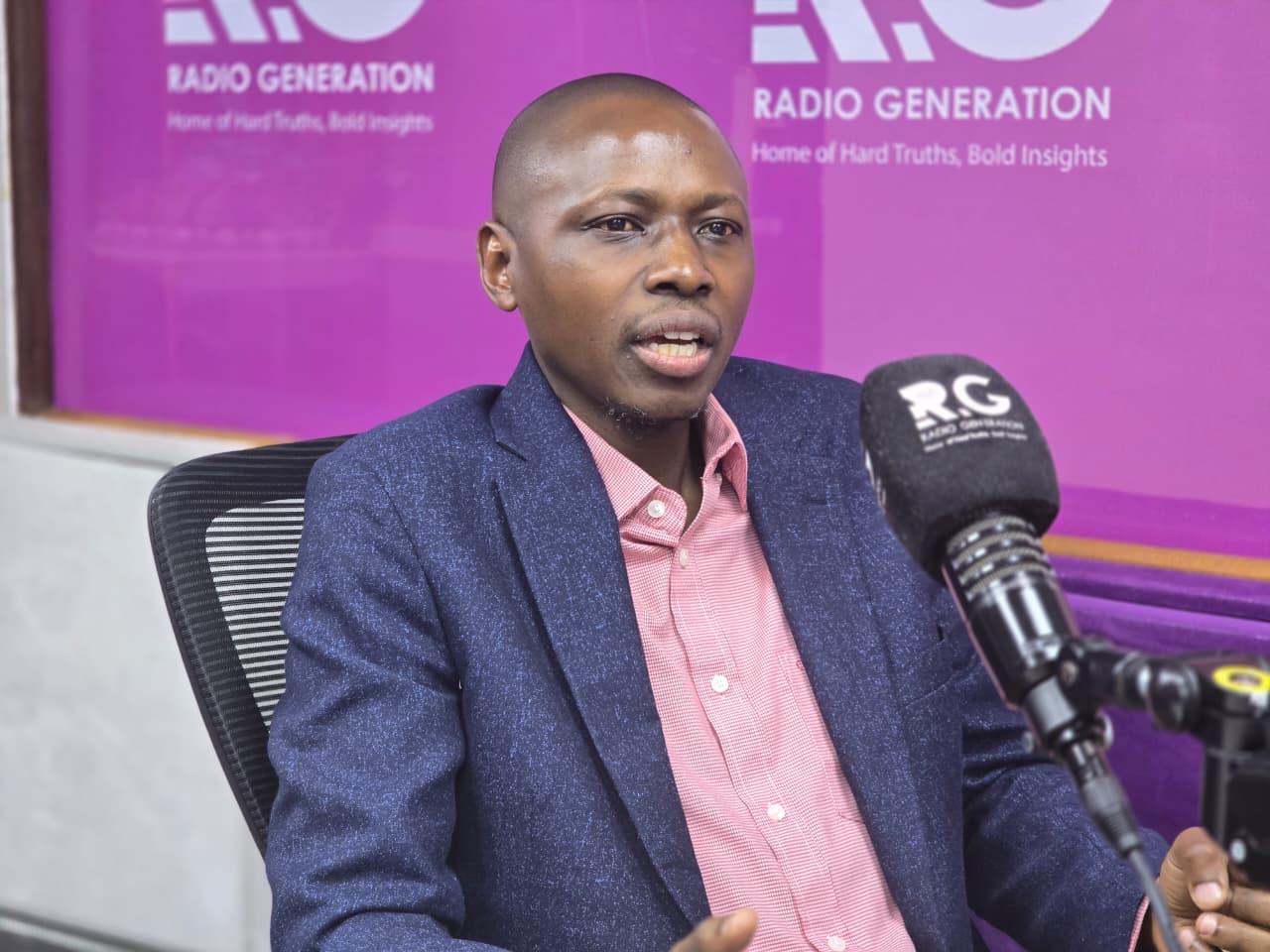
One typical Tuesday, Francis Njiraini, alongside his wife, went for a routine check-up at a hospital; little did he know it would mark the beginning of a battle with an aggressive form of cancer.
Speaking during an interview on Radio Generation, Njiraini, a Director at SEIDOR and Country Director at Makena Children's Foundation, described how the doctor broke the news to him about the results of what he thought was a normal medical visit.
“The doctor said, ‘I have good news and bad news.’ And I said, ‘Let’s deal with the bad news first.’ And the doctor said, ‘Look, you have a growth, and the growth is malignant,’” Njiraini said.
Latest Stories
- Ruto urges African states to process minerals locally to unlock value
- Ruto downplays viral English comments, sends message to Nigeria
- JSC begins Supreme Court judge recruitment after Justice Ibrahim’s death
- KNUT warns funding delays hurting free education delivery
- KNUT raises alarm as 2025 exam workers wait months for payment
“I paused. My wife looked at me as if to ask me to wake up from this dream. Could this be true? I thought the doctor must have missed something. It cannot be me. I still remember it vividly when we walked out of the doctor’s room.”
He said the diagnosis threw him into brief confusion, wondering why he was the one receiving such life-changing news.
The good news, however, was that doctors had caught it early. He was diagnosed with nasopharyngeal cancer, a rare cancer that develops in the upper throat behind the nose.
A blocked nose
Ironically, the diagnosis began with something ordinary; a blocked nose.
“I had what I thought was a common cold. I even knew what prescription I would get because I’ve had this before,” he explains.
But that day, Njiraini missed his usual doctor and saw a different physician, a female doctor he had never consulted before.
“She just looked at me and said, ‘Let’s do a CT scan,’” he said.
A CT scan for a cold felt excessive. Even his wife questioned it.
“It felt like using a hammer to kill a mosquito.”
But he agreed. That decision saved his life.
“If I had seen my usual doctor, I would have walked home with antihistamines and painkillers. That CT scan is what found the tumor,” he admits.
That evening, after a full day of tests, they walked into a café to eat. He quickly picked his meal, but his wife didn’t even open the menu.
“She was writing something down,” he notes.
It was a list of five names.
“She said, ‘We need to talk to these five people before we take the next step.’”
They called it the “Name of Five List.”
Each person brought a perspective that shaped their journey. He now calls them “divine helpers.”
One friend in the medical field gave Njiraini advice that changed everything: “Before you commit to any treatment, think about the quality of life after treatment.”
It was something he had never considered before.
“If you’re sick, you just treat it; that’s what I thought. But this is different. Treatment has impact. What will life look like afterward?” Njiraini poses.
Another warned them not to neglect recovery.
“People take treatment seriously, but they ignore recovery. Your body is beaten. Recovery is as important as treatment,” he explains.
Those conversations completely reframed their approach.
Seeking the best technology
Research led them to a difficult but clear decision: seek advanced treatment abroad.
Technology available in Kenya at the time, they felt, might compromise long-term quality of life. With help from one of their “divine helpers,” they researched hospitals globally and eventually chose India.
Treatment involved a combination of radiotherapy and chemotherapy.
“It became my new job. You wake up and go to the hospital like someone going to work,” he says.
Treatment sessions ran Monday through Friday, week after week.
He stayed in India for four months. His wife stood by him throughout, leaving behind their three children, aged 16, 9 and 3 at the time. After two months, she briefly returned home to check on them before rejoining him.
“That support was everything,” he adds.
A journey documented
During treatment, Njiraini began journaling to document his gruelling treatment process.
“Every day I wrote what I was feeling, what the doctors said, and how my body was responding," Njiraini continued.
Initially, the writing was for survival; a way to process fear and uncertainty. Later, it became something more.
“When we came back, I decided to write a book. I wrote it for my children. I wanted them to know what we went through and what we overcame,” he remarked.
He wanted them to understand one truth: “Bad things will happen in life. Difficult moments will come. You’re not immune. But there’s good news; you can overcome.”
The cancer survivor describes his book, "One Christian Man's Journey to Beat Cancer," as a deeply personal memoir of walking through the valley with honesty and hope.
"It is the story of a man who refused to let a devastating diagnosis define his life-and who emerged five years in remission with a renewed calling to inspire fathers, families, and anyone facing an uncertain road," his book reads.
Many cancer cases in Kenya could be avoided if people adopt preventive measures, a new global study shows.
The National Cancer Institute reports that around 47,000 Kenyans are diagnosed with cancer each year, but nearly 19,000 of these cases could be prevented through vaccination, early detection, and limiting exposure to known risk factors such as tobacco and alcohol.
The research, conducted by the World Health Organization (WHO) and the International Agency for Research on Cancer (IARC), found that close to 40 per cent of cancers worldwide result from preventable factors.

Comments
Sign in with Google to comment, reply, and like comments.
Continue with Google